
At Equilibrium Therapeutics in Victoria, BC, many of our patients ask about shockwave therapy when they are dealing with stubborn tendon pain or ongoing heel or elbow issues. If you enjoy walking Dallas Road, running the Elk/Beaver Lake trails, or playing tennis and pickleball, persistent pain can make it harder to stay active and do the things you enjoy. In this post, we explain what shockwave therapy is, how it is used, what current research suggests, and who it may help. Our goal is to give you clear, balanced information so you can have an informed conversation with your care team about whether shockwave might fit into your physiotherapy treatment in Victoria.
What Is Shockwave Therapy?
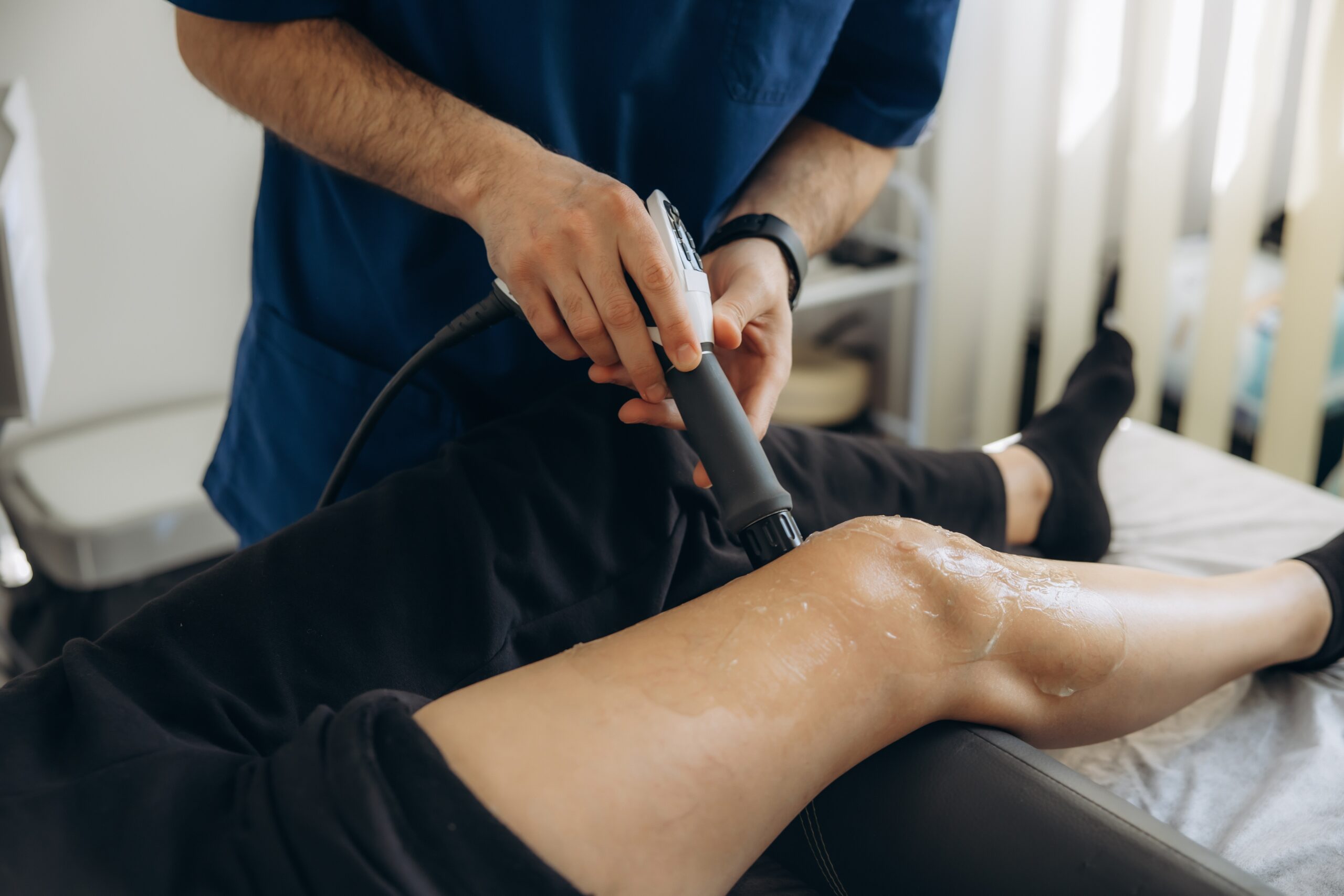
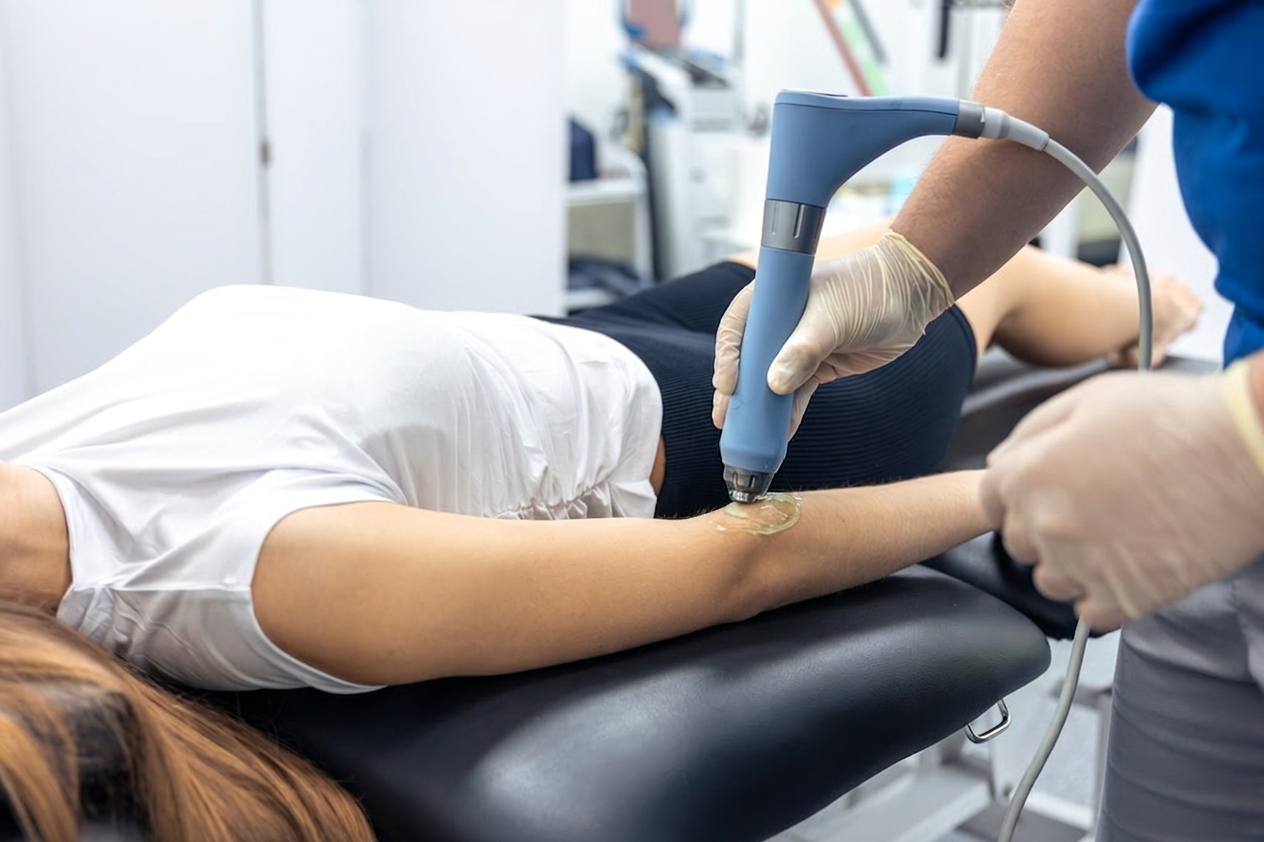
Shockwave therapy, often called extracorporeal shockwave therapy (ESWT), is a non-invasive treatment that uses high-energy sound waves applied from outside the body to targeted tissues. These sound waves are delivered through a handheld device placed on your skin over the painful area, usually with ultrasound gel to help transmit the waves.
There are two main types of shockwave therapy used in musculoskeletal care:
- Radial shockwave: The waves spread out as they travel through the tissue, which may be useful for slightly broader, more superficial areas.
- Focused shockwave: The waves are directed more precisely to a deeper point, which may be helpful for more localized problems.
How Might Shockwave Therapy Help?
Shockwave therapy is usually considered for ongoing tendon and soft tissue issues that have not improved with rest, activity modification, or standard conservative care. While each person responds differently, shockwave therapy may:
- Stimulate local blood flow and tissue metabolism
- Encourage the body’s natural healing response over time
- Influence how pain signals are processed in the treated area
These potential effects are why shockwave therapy may be considered as part of treatment for certain chronic tendon and soft tissue conditions.
How Shockwave Therapy May Help With Common Tendon And Foot Pain
Shockwave therapy can be a helpful treatment option for certain types of persistent tendon and foot pain. At Equilibrium Therapeutics, it may be included as part of a personalized treatment plan based on your symptoms, movement needs, and goals.
Tennis Elbow: Supporting Pain Relief And Arm Function
Tennis elbow can cause discomfort around the outside of the elbow and make everyday activities involving gripping, lifting, or repetitive arm movements more difficult. It is common among people who enjoy racquet sports, strength training, or other activities that place repeated stress on the elbow. Shockwave therapy may help support pain relief and encourage the body’s natural healing response in the affected tendon, making it one option that may help you get back to using your arm more comfortably.
Achilles Tendinopathy: Supporting Recovery And Movement
The Achilles tendon plays an important role in walking, running, hiking, jumping, and many of the activities that keep you moving. When Achilles pain or stiffness starts getting in the way, finding the right approach can help you continue working toward your activity goals.
Whether you enjoy running the trails around Greater Victoria, hiking, playing field sports, or simply staying active throughout the day, your care should support the activities that matter most to you. Shockwave therapy may help reduce discomfort and support the healing process in the Achilles tendon, making it a potential part of a treatment plan designed around your activity level and how you want to move.
Plantar Fasciitis: Helping You Get Back On Your Feet
Plantar fasciitis can make everyday movement uncomfortable, especially when you’re spending a lot of time on your feet or enjoying activities such as walking, hiking, running, and court sports. Shockwave therapy may help to reduce your heel and foot pain while supporting the body’s natural healing process, which may make it easier to move more comfortably and return to the activities you enjoy.
At Equilibrium Therapeutics, your treatment can be tailored around your lifestyle, movement needs, and goals. Shockwave therapy may be combined with other supportive strategies to help you feel more comfortable on your feet and keep moving with confidence.
Who Might Consider Shockwave Therapy?
At our clinic, shockwave therapy may be discussed if you:
- Have ongoing tendon or soft tissue pain that has not improved with rest, graded exercise, and other conservative care
- Are looking for non-surgical options for conditions such as tennis elbow, certain forms of plantar fasciitis, or other chronic tendinopathies
- Are already engaged in a structured rehabilitation plan and want to explore whether adding a modality like shockwave may contribute to your progress
What to Expect During a Shockwave Session
If shockwave therapy feels appropriate for you, a typical session may look like this:
- Assessment and planning: We start with a detailed history and physical assessment to confirm that shockwave is suitable and safe for your specific situation.
- Positioning and gel: You are positioned comfortably, and gel is applied over the treatment area.
- Treatment: The handheld device is placed on the skin and delivers a series of pulses, which you may feel as tapping or brief, sharp sensations.
- Duration: Actual shockwave time is usually only a few minutes, often combined within a longer shockwave therapy or physiotherapy appointment.
- Follow-up plan: We often pair shockwave with specific exercises or other therapies to support tissue adaptation over time.
Is Shockwave Therapy Right for You?
Because every person and every injury is different, there is no one-size-fits-all answer to “does shockwave therapy work for tendon pain?”
When you visit us for physiotherapy in Victoria, BC, we focus first on a thorough assessment and a clear diagnosis. From there, we work with you to build a realistic, step-by-step plan that may include exercise, manual therapy, education, and, when appropriate, modalities like shockwave therapy.
FAQ: Shockwave Therapy in Greater Victoria
Is shockwave therapy painful?
Most people describe shockwave therapy as uncomfortable rather than truly painful. You may feel a series of rapid taps or sharp sensations over the treatment area. We adjust the intensity based on your comfort and can pause at any time. Some mild soreness after treatment is common and typically settles within a day or two.
How many sessions will I need?
The number of sessions varies depending on the condition, how long you have had symptoms, and how you respond. Many protocols involve several treatments spaced over a few weeks. Your therapist will recommend an appropriate treatment schedule after assessing your condition and will adjust the plan based on your progress.
Can shockwave therapy replace exercise or rehab?
Shockwave therapy is rarely used as a stand-alone solution. For tendon pain and chronic tendinopathy, a structured, progressive exercise program is usually a key part of recovery. We typically use shockwave as a potential complement to active rehabilitation, not a replacement.
Is shockwave therapy safe?
Shockwave therapy is generally considered safe when used appropriately. Certain medical conditions, medications, or areas of the body may make shockwave inappropriate. Your therapist will review your health history to determine whether it is a reasonable option for you.
Do I need a referral to access shockwave therapy at Equilibrium Therapeutics?
You usually do not need a referral to see our physiotherapists for shockwave therapy discussions, although some extended health plans may require a physician’s referral for reimbursement. Our team can help you understand what your particular plan may cover and how to coordinate your care.
Wondering If Shockwave Therapy Is Right for You?
If you are dealing with persistent tendon, heel, or elbow pain and want to explore your treatment options, our team at Equilibrium Therapeutics can help. We will assess your condition, discuss whether shockwave therapy may be appropriate, and create a treatment plan based on your goals.
Book an Appointment with our team in Victoria, BC.
References
- Jin R, et al. Comparison of the efficacy of different types and intensities of extracorporeal shock wave therapy for lateral epicondylitis: a systematic review and network meta-analysis. J Orthop Surg Res. 2026. doi:10.1186/s13018-026-06984-0
- Korakakis V, et al. Shockwave Therapy for Midportion and Insertional Achilles Tendinopathy: A Nail in the Coffin? A Systematic Review With Meta-Analysis. J Orthop Sports Phys Ther. 2026. doi:10.2519/jospt.2026.13985
- Alotaibi MN, et al. Comparison of laser therapy and extracorporeal shock wave therapy in the treatment of patients with plantar fasciitis: a systematic review and meta-analysis of prospective studies. Lasers Med Sci. 2026. doi:10.1007/s10103-026-04824-5